
Industras

โลจิสติกส์อัจฉริยะ: Digital Twins แบบจำลองเสมือนเพื่อรองรับการเติบโตของห่วงโซ่อุปทาน

Share with

ห่วงโซ่อุปทานกำลังเผชิญกับความท้าทายที่สำคัญเนื่องจากความซับซ้อนที่เพิ่มขึ้น การระบาดครั้งใหญ่ของโควิด-19 และการแข่งขันที่รุนแรง  แนวทางแก้ไขที่เป็นไปได้เพื่อเพิ่มรายได้และปรับปรุงความสามารถในการฟื้นตัวคือการใช้ดิจิทัลทวินที่ขับเคลื่อนด้วย AI  ดิจิทัลทวินเหล่านี้คือแบบจำลองเสมือนของวัตถุ ระบบ หรือกระบวนการในโลกแห่งความเป็นจริงที่ช่วยให้สามารถจำลองสถานการณ์ต่างๆ และคาดการณ์ผลลัพธ์ได้  โดยการใช้ข้อมูลแบบเรียลไทม์ ดิจิทัลทวินเหล่านี้ให้ข้อมูลเชิงลึกที่มีคุณค่าเชิงธุรกิจ หลายองค์กรกำลังใช้ดิจิทัลทวินเพื่อปรับปรุงการดำเนินงานให้เหมาะสม วางแผนตัวเลือกในการดำเนินการทางธุรกิจต่างๆ และใช้เพื่อตัดสินใจได้ดีขึ้น  การวิจัยตลาดชี้ให้เห็นถึงการเติบโตอย่างมีนัยสำคัญสำหรับตลาดดิจิทัลทวิน โดยคาดการณ์ว่าจะมีการเพิ่มขึ้นรายปี 30-40% ในอีกไม่กี่ปีข้างหน้า โดยมีมูลค่า 125 พันล้าน ถึง 150 พันล้านดอลลาร์สหรัฐภายในปี 2032 อ้างอิงจาก McKinsey
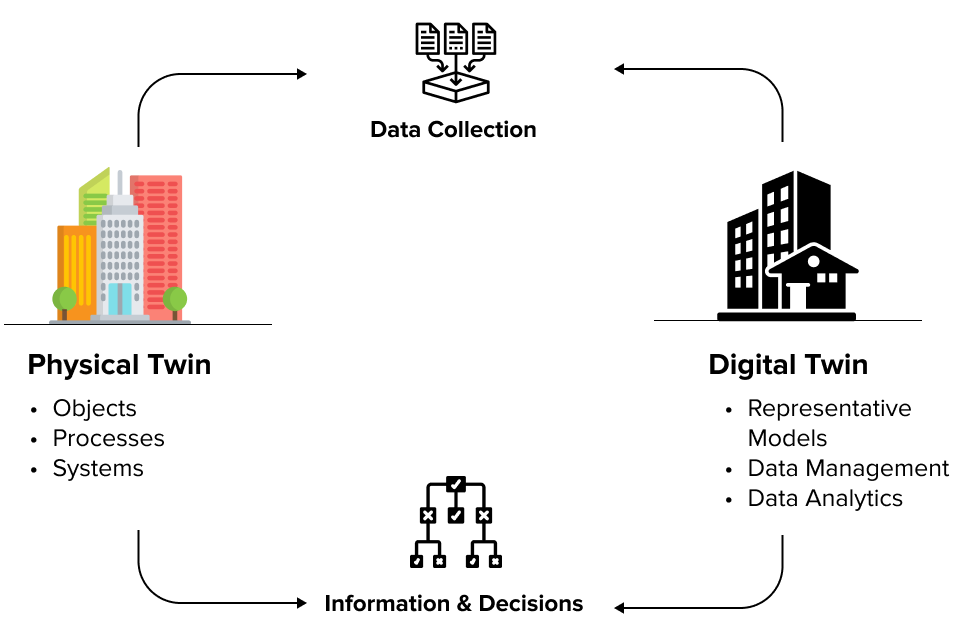
Digital twins as a “virtual mirror” of a company
Source: 10 use cases and benefits of adopting digital twins in retail, Appinventiv
Digital twins as a “virtual mirror” of a company
Source: 10 use cases and benefits of adopting digital twins in retail, Appinventiv

เพื่อแสดงให้เห็นว่าห่วงโซ่อุปทานแบบฟื้นตัวได้เองทำงานอย่างไร ลองพิจารณาตัวอย่างนี้ ผู้ค้าปลีกรายหนึ่งใช้ดิจิทัลทวินเพื่อกำหนดระดับสินค้าคงคลังเพื่อความปลอดภัยแบบไดนามิกสำหรับสินค้าแต่ละรายการ (SKU) ที่ศูนย์กระจายสินค้าทุกแห่ง ระดับสินค้าคงคลังเหล่านี้จะปรับเปลี่ยนโดยอัตโนมัติโดยอิงตามความต้องการในท้องถิ่นและตามฤดูกาล การปรับปรุงประสิทธิภาพโดยละเอียดนี้ครอบคลุมไปไกลกว่าเพียงแค่การจัดการสินค้าคงคลัง เพื่อครอบคลุมทุกด้านของห่วงโซ่อุปทาน นับตั้งแต่การจัดซื้อและการออกแบบผลิตภัณฑ์ ไปจนถึงการผลิตและการพยากรณ์ความต้องการ ตัวอย่างเช่น การวางแผนการผลิตโดยละเอียดของผู้ค้าปลีกสามารถประสานงานกับขนส่งได้อย่างไร้รอยต่อ อีกทั้งช่วยวางแผนตัดสินใจการจจัดวางสินค้าคงคลัง การวางแผนแบบไดนามิกนี้พบใน ตัวอย่างเช่น สินค้าที่มีความต้องการสูงและมีศักยภาพในการขายควบคู่ ซึ่งต้นทุนการผลิตที่เพิ่มขึ้นถูกชดเชยด้วยต้นทุนโลจิสติกส์โดยรวมที่ต่ำลงเนื่องจากการจัดส่งแบบรวมและอัตราการเปลี่ยนลูกค้าเป้าหมายที่ดีขึ้น การสร้างแบบจำลองเชิงพยากรณ์ที่ซับซ้อนประเภทนี้คือจุดแข็งของดิจิทัลทวิน ผลลัพธ์ทั่วไปในสถานการณ์ดังกล่าวรวมถึงการปรับปรุงสูงสุดถึง 20% ในการตอบสนองความคาดหวังของลูกค้า ลดต้นทุนค่าแรงลง 10% และเพิ่มรายได้ขึ้น 5%

ซอฟต์แวร์การจัดการห่วงโซ่อุปทาน (SCM) สมัยใหม่ ซึ่งครอบคลุมเครื่องมือต่างๆ เช่น ระบบการวางแผนและกำหนดตารางขั้นสูง (APS) ระบบการจัดการคลังสินค้า (WMS) และระบบการจัดการการขนส่ง (TMS) ทำให้งานที่สำคัญของห่วงโซ่อุปทานเป็นไปโดยอัตโนมัติในช่วงสิบปีที่ผ่านมา ซึ่งช่วยปรับปรุงปฏิสัมพันธ์ระหว่างซัพพลายเออร์ ผู้ซื้อ และผู้จัดส่งสินค้าได้อย่างมาก ดิจิทัลทวินสามารถผสานรวมกับเครื่องมือ SCM ที่มีอยู่เหล่านี้ ทำหน้าที่เสริมที่อยู่เหนือเครื่องมือตัวอื่นๆ เช่น ทัลทวินสามารถปรับปรุงข้อมูลที่ใช้โดยเครื่องมือ SCM สร้างการวิเคราะห์เชิงคาดการณ์เพื่อจัดการกับสถานการณ์ต่างๆ ที่อาจเกิดขึ้น ตัวอย่างเช่น ผู้ผลิตอุปกรณ์ดั้งเดิม (OEM) ระดับโลกรายหนึ่งได้พัฒนา ดิจิทัลทวิน เพื่อปรับปรุงนโยบายที่ใช้ภายในแพลตฟอร์ม TMS สำหรับโลจิสติกส์ขาออก ซึ่งส่งผลให้ต้นทุนค่าขนส่งและค่าเสียหายลดลง 8%
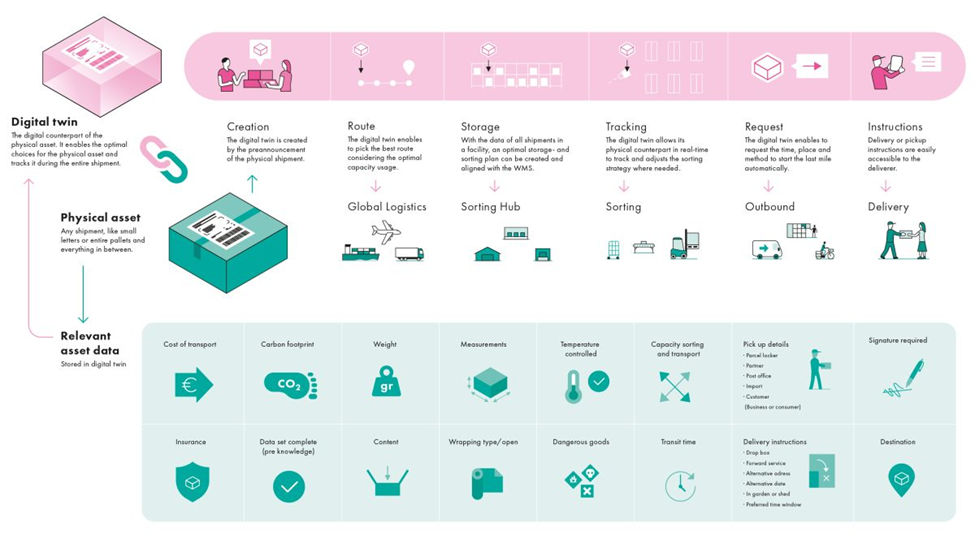
Digital twins help postal and logistics companies plan for the futuire
Source: Forwarder Magazine
Digital twins help postal and logistics companies plan for the futuire
Source: Forwarder Magazine

ธุรกิจเกี่ยวข้องกับห่วงโซ่อุปทานกำลังใช้แบบจำลองดิจิทัลเพื่อเพิ่มประสิทธิภาพทั้งกลยุทธ์ระยะยาวและการดำเนินงานประจำวัน  เราได้เห็นบริษัทต่างๆ ใช้แบบจำลองดิจิทัลบ่อยที่สุดสำหรับการวางตำแหน่งและการพยากรณ์สินค้าคงคลัง การจัดการการเคลื่อนย้ายสินค้าภายในคลังสินค้าและโรงงาน และการช่วยเหลือในการวางแผนการผลิต อย่างไรก็ตาม สิ่งเหล่านี้เป็นเพียงตัวอย่างบางส่วนของวิธีที่แบบจำลองดิจิทัลถูกนำไปใช้ทั่วทั้งห่วงโซ่อุปทาน ไม่ว่าแบบจำลองดิจิทัลจะถูกใช้อย่างไร ประโยชน์ที่ได้รับนั้นชัดเจน ซึ่งเป็นประโยชน์ต่อทั้งการวางแผนเชิงกลยุทธ์และการดำเนินงานประจำวัน

ในระดับกลยุทธ์ ดิจิทัลทวินสามารถลดความเสี่ยงที่เกี่ยวข้องกับการวางแผนระยะยาวและการเปลี่ยนแปลงทางดิจิทัลในวงกว้างได้ โดยการจำลองผลลัพธ์ที่เป็นไปได้ การสร้างแบบจำลองเชิงพยากรณ์แบบ “what-if” นี้ช่วยให้บริษัทต่างๆ สามารถประเมินผลกระทบทั้งหมดของแผนกลยุทธ์ได้อย่างมั่นใจ ตัวอย่างเช่น ผู้ค้าปลีกรายหนึ่งใช้ดิจิทัลทวินซึ่งครอบคลุมทั้งเครือข่ายการกระจายสินค้าเพื่อวิเคราะห์ผลกระทบของการออกแบบศูนย์กระจายสินค้าแห่งใหม่ ก่อนหน้านี้ บริษัทได้ใช้วิธีการจากบนลงล่างเพื่อกำหนดขนาดและที่ตั้งของจุดถ่ายสินค้าใหม่ที่มีศักยภาพ อย่างไรก็ตาม โดยการใช้ดิจิทัลทวินเพื่อสร้างแบบจำลองข้อจำกัดที่เป็นไปได้ทั้งหมดของการจัดวางจุดถ่ายสินค้านั้น จนค้นพบว่าสามารถปรับขนาดและย้ายที่ตั้งใหม่ โดยใช้พื้นที่อสังหาริมทรัพย์น้อยลง 50% โดยไม่สูญเสียฟังก์ชันการทำงาน
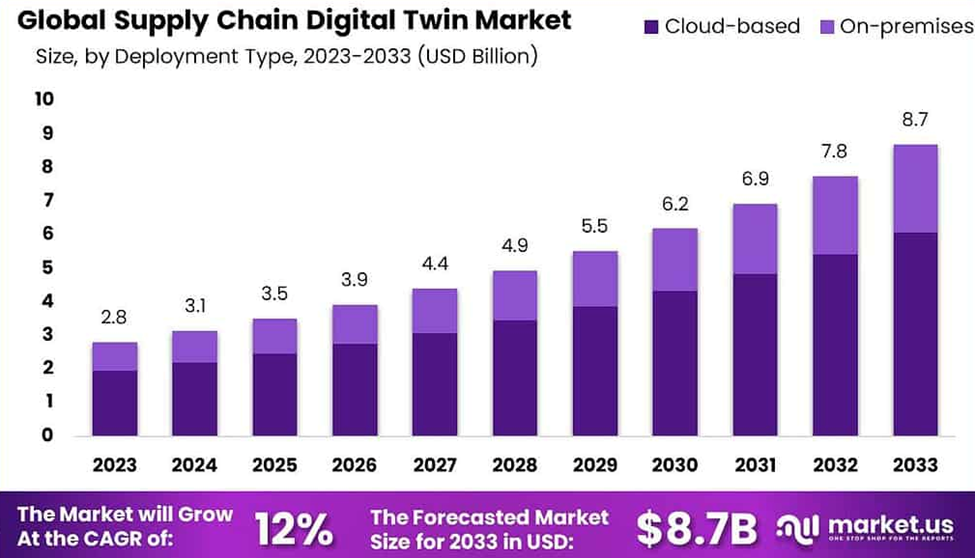
Supply Chain Digital Twin Market Size, 2025-2034 (USD Billion)
Supply Chain Digital Twin Market, Market.Us
Supply Chain Digital Twin Market Size, 2025-2034 (USD Billion)
Supply Chain Digital Twin Market, Market.Us

ในระดับการปฏิบัติงาน นอกเหนือจากการมีอิทธิพลต่อการตัดสินใจเชิงกลยุทธ์เพียงครั้งคราวแล้ว ดิจิทัลทวินยังสามารถทำหน้าที่เป็นแบบจำลองส่วนกลาง ปรับปรุงการตัดสินใจในแต่ละวันให้เหมาะสมทั่วทั้งการปฏิบัติงานต่างๆ  แทนที่จะใช้แบบจำลองเชิงพยากรณ์ที่แยกจากกันและไม่ได้เชื่อมต่อกัน ดิจิทัลทวินสามารถผสานรวมแบบจำลองหลายแบบสำหรับการพยากรณ์และการตัดสินใจที่เป็นหนึ่งเดียว โดยจะพิจารณาถึงความสมดุลที่แข่งขันกันทั่วทั้งห่วงโซ่อุปทานแบบไดนามิก เพื่อแนะนำการปรับปรุงการปฏิบัติงานโดยละเอียด  ตัวอย่างเช่น ผู้ค้าปลีกรายเดิมที่กล่าวถึงก่อนหน้านี้ ไม่เพียงแต่ใช้ดิจิทัลทวินเพื่อปรับปรุงขนาดและรูปแบบของจุดถ่ายสินค้าภายในศูนย์กระจายสินค้าให้เหมาะสมเท่านั้น แต่ยังใช้เพื่อปรับปรุงการวางตำแหน่งสินค้าคงคลังรายวันให้เหมาะสมอีกด้วย  โดยได้พยากรณ์ระดับอุปทานรายสัปดาห์เพื่อสร้างสมดุลระหว่างต้นทุน คุณภาพการบริการ และความยั่งยืน ซึ่งส่งผลให้มีการปรับปรุงการใช้ประโยชน์ศูนย์กระจายสินค้าระดับภูมิภาคเพิ่มขึ้น 10% และลดต้นทุนการดำเนินการตามคำสั่งซื้อลง 5%

Article by: Asst. Prof. Suwan Juntiwasarakij, Ph.D., Senior Editor & MEGA Tech
Smart Logistics: Digital Twins to Support Supply-Chain Growth

Share with

Supply chains are facing major challenges due to increased complexity, the COVID-19 pandemic, and intense competition.  A potential solution to boost revenue and improve resilience is the use of AI-powered digital twins. These digital twins are virtual models of real-world objects, systems, or processes that allow for simulating different scenarios and predicting outcomes. By using real-time data, they provide valuable insights.  Many organizations are already leveraging digital twins to optimize their operations, plan for various possibilities, and make better decisions.  Market research suggests significant growth for the digital twin market, with annual increases of 30-40% expected over the next few years, reaching a value of $125 billion to $150 billion by 2032, according to McKinsey.

Digital twins as a “virtual mirror” of a company
Source: 10 use cases and benefits of adopting digital twins in retail, Appinventiv
Digital twins as a “virtual mirror” of a company
Source: 10 use cases and benefits of adopting digital twins in retail, Appinventiv

To illustrate how a self-healing supply chain functions, consider this example: a retailer uses digital twins to establish dynamic safety stock levels for each product (SKU) at every fulfillment center. These levels automatically adjust based on local and seasonal demand. This detailed optimization extends beyond just inventory management to encompass every aspect of the supply chain, from purchasing and product design to manufacturing and demand forecasting.  For instance, the retailer’s detailed production planning can be coordinated with downstream transportation and inventory placement decisions. This dynamic planning might reveal, for example, a high-demand item with cross-selling potential where increased manufacturing costs are balanced by lower overall logistics costs due to combined shipping and improved customer conversion rates. This type of complex predictive modeling is a strength of digital twins.  Typical outcomes in such situations include up to a 20% improvement in meeting customer expectations, a 10% reduction in labor costs, and a 5% increase in revenue.

Modern supply chain management (SCM) software, encompassing tools like advanced planning and scheduling (APS), warehouse management systems (WMS), and transportation management systems (TMS), has automated significant portions of the supply chain over the last ten years, greatly improving interactions between suppliers, buyers, and shippers. Digital twins can integrate with these existing SCM tools, acting as an innovative overlay.  By doing so, they can refine the data used by SCM tools, generating predictive analytics to handle various potential situations.  For instance, a global original equipment manufacturer (OEM) developed a digital twin to optimize the policies it used within its TMS platform for outbound logistics. This resulted in an 8% reduction in freight and damage costs.

Digital twins help postal and logistics companies plan for the futuire
Source: Forwarder Magazine
Digital twins help postal and logistics companies plan for the futuire
Source: Forwarder Magazine

Supply chain organizations are using digital twins to improve both their long-term strategies and day-to-day operations.  We’ve most often seen companies use them for inventory positioning and forecasting, managing the movement of goods within warehouses and factories, and assisting with production planning. However, these are just some examples of how digital twins are being used across the supply chain. Regardless of the specific application, the advantages are evident: they benefit both strategic planning and daily operations.

On a strategic level, digital twins can reduce the risk associated with long-term planning and broader digital transformations by simulating possible outcomes. This type of “what-if” predictive modeling allows companies to confidently assess the complete impact of their strategic plans. For example, a retailer used a detailed digital twin of its distribution network to analyze the effects of a new distribution center design.  Previously, the company had used a top-down approach to determine the size and location of a potential new cross-dock. However, by using a digital twin to model all the potential limitations of that cross-dock placement, they discovered they could resize and relocate it onto 50% less real estate without sacrificing functionality.

Supply Chain Digital Twin Market Size, 2025-2034 (USD Billion)
Supply Chain Digital Twin Market, Market.Us
Supply Chain Digital Twin Market Size, 2025-2034 (USD Billion)
Supply Chain Digital Twin Market, Market.Us

On an operational level, beyond just influencing single strategic decisions, digital twins can serve as a central model, optimizing daily decision-making across various operations.  Instead of using separate, unconnected predictive models, a digital twin can integrate multiple models for unified forecasting and decision-making. It dynamically weighs competing trade-offs across the supply chain to recommend detailed operational adjustments.  For instance, the same retailer mentioned earlier used its digital twin not only to optimize the size and layout of its cross-dock within the distribution center but also to optimize daily inventory positioning.  It forecasted weekly supply levels to balance cost, service quality, and sustainability. This resulted in a 10% improvement in regional distribution center utilization and a 5% reduction in fulfillment costs.

Article by: Asst. Prof. Suwan Juntiwasarakij, Ph.D., Senior Editor & MEGA Tech

Smart Logistics: Digital Twins to Support Supply-Chain Growth

Share with

Supply chains are facing major challenges due to increased complexity, the COVID-19 pandemic, and intense competition.  A potential solution to boost revenue and improve resilience is the use of AI-powered digital twins. These digital twins are virtual models of real-world objects, systems, or processes that allow for simulating different scenarios and predicting outcomes. By using real-time data, they provide valuable insights.  Many organizations are already leveraging digital twins to optimize their operations, plan for various possibilities, and make better decisions.  Market research suggests significant growth for the digital twin market, with annual increases of 30-40% expected over the next few years, reaching a value of $125 billion to $150 billion by 2032, according to McKinsey.

Digital twins as a “virtual mirror” of a company
Source: 10 use cases and benefits of adopting digital twins in retail, Appinventiv
Digital twins as a “virtual mirror” of a company
Source: 10 use cases and benefits of adopting digital twins in retail, Appinventiv

To illustrate how a self-healing supply chain functions, consider this example: a retailer uses digital twins to establish dynamic safety stock levels for each product (SKU) at every fulfillment center. These levels automatically adjust based on local and seasonal demand. This detailed optimization extends beyond just inventory management to encompass every aspect of the supply chain, from purchasing and product design to manufacturing and demand forecasting.  For instance, the retailer’s detailed production planning can be coordinated with downstream transportation and inventory placement decisions. This dynamic planning might reveal, for example, a high-demand item with cross-selling potential where increased manufacturing costs are balanced by lower overall logistics costs due to combined shipping and improved customer conversion rates. This type of complex predictive modeling is a strength of digital twins.  Typical outcomes in such situations include up to a 20% improvement in meeting customer expectations, a 10% reduction in labor costs, and a 5% increase in revenue.

Modern supply chain management (SCM) software, encompassing tools like advanced planning and scheduling (APS), warehouse management systems (WMS), and transportation management systems (TMS), has automated significant portions of the supply chain over the last ten years, greatly improving interactions between suppliers, buyers, and shippers. Digital twins can integrate with these existing SCM tools, acting as an innovative overlay.  By doing so, they can refine the data used by SCM tools, generating predictive analytics to handle various potential situations.  For instance, a global original equipment manufacturer (OEM) developed a digital twin to optimize the policies it used within its TMS platform for outbound logistics. This resulted in an 8% reduction in freight and damage costs.

Digital twins help postal and logistics companies plan for the futuire
Source: Forwarder Magazine
Digital twins help postal and logistics companies plan for the futuire
Source: Forwarder Magazine

Supply chain organizations are using digital twins to improve both their long-term strategies and day-to-day operations.  We’ve most often seen companies use them for inventory positioning and forecasting, managing the movement of goods within warehouses and factories, and assisting with production planning. However, these are just some examples of how digital twins are being used across the supply chain. Regardless of the specific application, the advantages are evident: they benefit both strategic planning and daily operations.

On a strategic level, digital twins can reduce the risk associated with long-term planning and broader digital transformations by simulating possible outcomes. This type of “what-if” predictive modeling allows companies to confidently assess the complete impact of their strategic plans. For example, a retailer used a detailed digital twin of its distribution network to analyze the effects of a new distribution center design.  Previously, the company had used a top-down approach to determine the size and location of a potential new cross-dock. However, by using a digital twin to model all the potential limitations of that cross-dock placement, they discovered they could resize and relocate it onto 50% less real estate without sacrificing functionality.

Supply Chain Digital Twin Market Size, 2025-2034 (USD Billion)
Supply Chain Digital Twin Market, Market.Us
Supply Chain Digital Twin Market Size, 2025-2034 (USD Billion)
Supply Chain Digital Twin Market, Market.Us

On an operational level, beyond just influencing single strategic decisions, digital twins can serve as a central model, optimizing daily decision-making across various operations.  Instead of using separate, unconnected predictive models, a digital twin can integrate multiple models for unified forecasting and decision-making. It dynamically weighs competing trade-offs across the supply chain to recommend detailed operational adjustments.  For instance, the same retailer mentioned earlier used its digital twin not only to optimize the size and layout of its cross-dock within the distribution center but also to optimize daily inventory positioning.  It forecasted weekly supply levels to balance cost, service quality, and sustainability. This resulted in a 10% improvement in regional distribution center utilization and a 5% reduction in fulfillment costs.

Article by: Asst. Prof. Suwan Juntiwasarakij, Ph.D., Senior Editor & MEGA Tech

May June 2019​

Creative Solutions by Professional Designers

+(48) 555-0120-88

hello@example.com

2972 Westheimer Rd. Santa
Ana, Illinois 85486

Main Offices
Monday-Friday: 8am-5pm
Saturday: 9am-Midday
© Industras 2024, All Rights Reserved.