
Article by: Pornphimol Winyuchakrit (Ph.D.)
Sustainable Energy and Low Carbon Research Unit
Sirindhorn International Institute of Technology, Thammasat University
What is “BLOCKCHAIN”?
Blockchain is a software technology that can secure communication of important information. Blockchain is a distributed transaction technology over peer-to-peer (P2P) networks independently from a central authority as decentralized system. As in the present, a central authority is responsible for overseeing or controlling the transactions (see the Figure below). For example, in the present, financial institutions or banks act as intermediaries for financial transaction, and energy agencies/companies control the energy trading transaction.
Therefore, it can be said that “Blockchain will help the consumers to conduct the transactions without any intermediaries”, which may help to reduce transaction cost, or the intermediaries will not be necessary in the future.
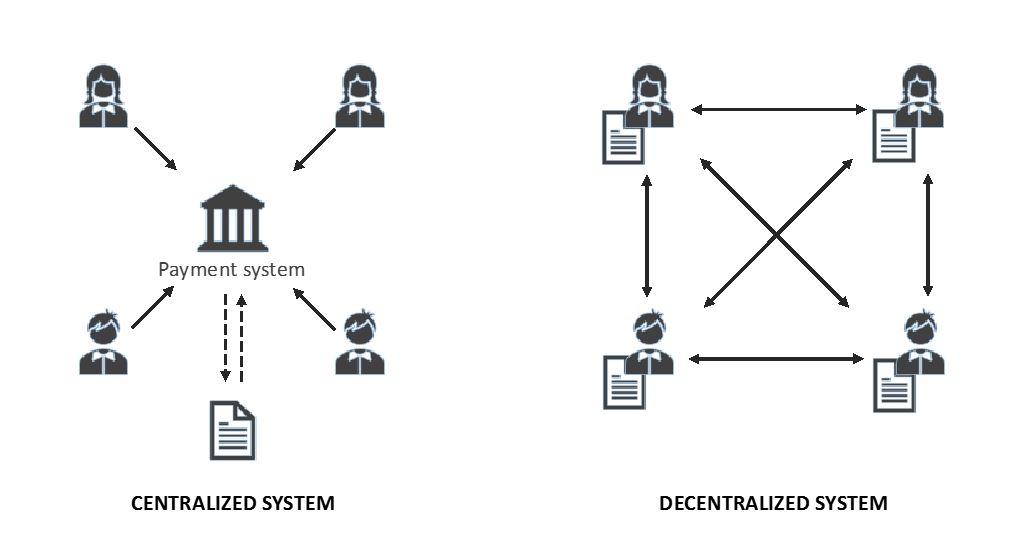
“BLOCKCHAIN” for energy transaction
Blockchain is an innovation that makes a large impact on global industry. Although development of this technology aims at economic and financial purposes, nowadays, other industries have applied this technology for improving their businesses potentially. Unexcepted for energy and environmental aspects, blockchain is applied and implemented in electrical trading transaction, whereas that electricity is produced by the consumers, called “Prosumers”, that is, consumers who are able to produce electricity themselves and become energy producers or sellers. However, responding to this fast development, grid operators must improve their efficiency to be able balancing real-time demand and supply in order to support the production of electricity from renewable energy into the power grid efficiently.
Application of the blockchain technology to energy system had been tested and done successfully in many countries; for example, the United States, the Netherlands, Germany, etc. For example, under the project of “TransActive Grid” in New York, electricity trading through the blockchain system was tested between neighboring groups more than 130 households. These households comprised of households that could not produce electricity, which acted as the consumers, and households that could produce electricity from solar energy and distributed into the micro-grid system, which acted as the prosumers. The results of this tests indicate that this application not only can enable households to trade electricity without any intermediaries, but also can help to raise clean energy awareness as well as to access alternative energy source from energy storage system.
“BLOCKCHAIN” and chance of energy efficiency improvement
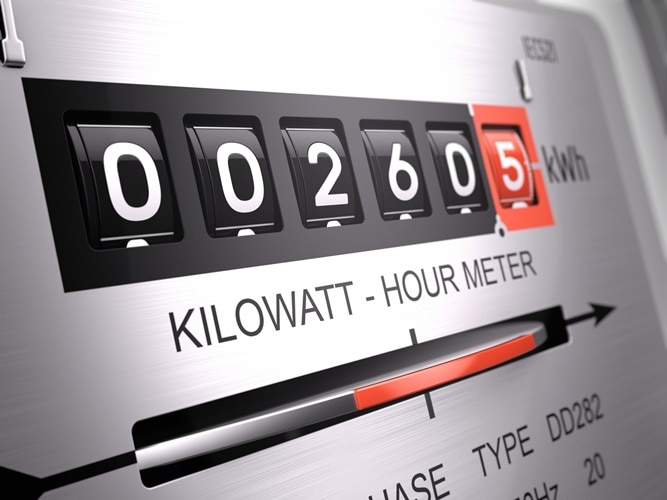
In theory, blockchain can improve energy efficiency through the energy management systems (EnMS), which works together with the Internet of Things (IoT) and/or smart meter, allowing the consumers to monitor their energy consumption directly from their own systems. This application can help to reduce the complexity of monitoring and verification on energy saving results. However, even if the application of blockchain for improving energy efficiency is still just a concept, it is a matter that has received wide attention. According to the conference of the United Nations Environment Program (UNEP) in last year, it was said that “the blockchain technology will be an important driver on faster energy efficiency improvement in demand sides leading to low carbon energy system or societies”. That’s why the blockchain is developed quickly and expected to success soon.